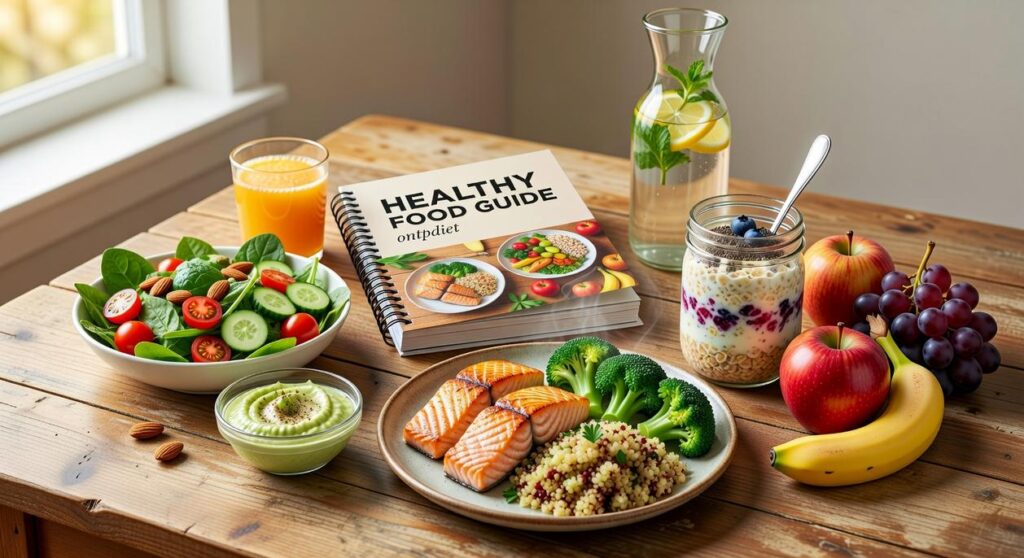
I’ve seen too many people give up on eating well because they can’t figure out what “healthy” actually means anymore.
You’re probably here because you’re tired of the confusion. One article says carbs are bad. Another says fat is the enemy. Someone on social media swears by eating only during a four-hour window. It’s exhausting.
Here’s the truth: healthy eating doesn’t need to be complicated.
I created this healthy food guide ontpdiet to cut through the noise. It’s built on the same principles registered dietitians use across Ontario and follows Canada’s national food guidelines.
No fads. No restrictions that make you miserable. Just a clear framework that works for real life.
This guide will show you how to build a balanced plate without overthinking it. You’ll learn what actually matters when it comes to food choices and what’s just marketing hype.
By the end, you’ll feel confident making decisions about what you eat. Not because you’re following some trend, but because you understand the basics that support long-term health.
Simple. Sustainable. Based on evidence that actually holds up.
The Foundation of Healthy Eating: Decoding Canada’s Food Guide
You’ve probably seen Canada’s Food Guide before.
Maybe your doctor handed you a pamphlet. Or you saw it posted in a school cafeteria somewhere.
But here’s what most people don’t get. It’s not just another government poster telling you what to eat. It’s actually a pretty simple system that works without making you count every calorie that goes in your mouth.
The tool at the center of it all? The Eat Well Plate.
Think of it as a visual cheat sheet. You look at your plate and you know if you’re doing it right. No apps. No food scales. Just your plate and some basic rules.
Now, some nutritionists will tell you this approach is too simple. They’ll say you need to track macros and weigh your food to really eat healthy. And sure, that works for some people (usually the ones who enjoy spreadsheets).
But most of us? We just want to eat better without turning every meal into a math problem.
The Eat Well Plate gives you that. And the healthy food guide ontpdiet breaks it down even further if you want to go deeper.
The Half Your Plate Rule
Here’s where you start.
Fill half your plate with vegetables and fruits. That’s it.
Not a quarter. Not a third. Half.
I know what you’re thinking. That’s a lot of vegetables. And yeah, it is. But there’s a reason for it.
Vegetables and fruits pack in fiber that keeps you full. They’ve got vitamins your body actually needs. Plus antioxidants that help your cells do their job without breaking down.
When I first tried this, I thought I’d be hungry all the time. Turns out, the fiber in vegetables fills you up way more than you’d expect (especially if you’re used to eating mostly bread and pasta).
Mix it up too. Don’t just eat the same salad every day.
Quarter Your Plate for Protein
The next quarter goes to protein.
Protein keeps you full. It repairs your muscles after you move around. It gives you steady energy that doesn’t crash two hours later.
Here’s what counts:
| Protein Source | Why It Works |
|---|---|
| —————- | ————– |
| Chicken & Fish | Lean options that most people already know how to cook |
| Beans & Lentils | Cheap and they last forever in your pantry |
| Tofu | Takes on whatever flavor you give it |
| Eggs | Quick to make and you probably have some in your fridge |
You don’t need to eat chicken breast every single meal. Switch it up based on what you have or what sounds good.
Pro tip: Cook a big batch of protein on Sunday. Makes the rest of the week way easier.
The Final Quarter for Whole Grains
Last quarter of your plate? Whole grains.
These are your complex carbohydrates. They give you energy that lasts instead of spiking your blood sugar and leaving you crashed out an hour later. Incorporating complex carbohydrates into your gaming routine, as emphasized by the Ontpdiet, can provide the sustained energy needed to maintain focus and performance without the dreaded crash that often follows high-sugar snacks. Incorporating complex carbohydrates into your gaming routine, as emphasized by the Ontpdiet, can significantly enhance your focus and endurance during those marathon sessions.
Good options include quinoa, brown rice, oats, and whole wheat bread.
Notice I said whole grains. Not white bread. Not regular pasta. The whole grain versions keep more of the fiber and nutrients intact.
When you eat these with your vegetables and protein, you get sustained energy. You’re not reaching for snacks 30 minutes after you finish eating.
Look, I’m not saying this system is perfect for everyone. Some people need more protein. Others do better with fewer grains.
But as a starting point? The Eat Well Plate works. You can see it. You can adjust it. And you don’t need to download anything or pay for a subscription.
Just look at your plate before you eat and ask yourself if it matches up.
Most of the time, that’s enough.
Building Blocks of a Balanced Diet: Understanding Macronutrients
I used to think protein was just for gym bros trying to get huge.
Then I got sick for three weeks straight one winter. My doctor ran some tests and told me I wasn’t eating enough protein. Turns out my immune system needed it just as much as my muscles did.
That’s when I started paying attention to macronutrients.
Proteins do way more than build muscle. They make hormones that regulate everything from your mood to your metabolism. They support your immune system (which I learned the hard way). They even help repair tissue when you’re injured.
You don’t need to eat chicken breast at every meal though. Lean sources work great. So do plant-based options like lentils, chickpeas, and quinoa.
Now let’s talk about carbs.
Some people will tell you carbs are the enemy. That cutting them out completely is the only way to stay healthy. I’ve tried that approach and felt miserable for weeks.
Here’s what actually matters. Complex carbs give you lasting energy. Think whole grains, sweet potatoes, and oats. They break down slowly and keep you going through the day.
Simple sugars? Those spike your blood sugar fast and leave you crashed an hour later. You don’t need to avoid them completely (I’m not giving up fruit). Just be mindful of how much you’re eating.
The real game changer for me was understanding fats.
Your brain is about 60% fat. It needs healthy fats to function right. So does your body when it comes to absorbing vitamins A, D, E, and K. Fats also help reduce inflammation, which matters more as you get older.
I focus on unsaturated fats now. Avocados on toast. Handful of almonds as a snack. Olive oil when I’m cooking. Seeds in my morning smoothie.
Once I got these three macronutrients balanced, everything else fell into place. I had more energy and my body just worked better.
That’s what a healthy food guide ontpdiet really comes down to. Understanding what each macronutrient does and giving your body what it needs.
From Theory to Table: Practical Tips for Everyday Wellness
You know what trips people up?
They read about nutrition science and think they need a PhD to eat better. But the gap between knowing what’s healthy and actually doing it? That’s where most of us get stuck.
I’m not going to tell you to overhaul your entire life. That doesn’t work anyway.
What does work is making small changes that fit into the life you already have. Here in Winston Salem, I see people at the Harris Teeter on Stratford Road every week, and most of them look overwhelmed in the aisles.
Let me break this down.
Start with how you eat, not just what you eat.
Mindful eating sounds fancy but it’s simple. Put your phone down during meals. Eat at a table instead of your car. Pay attention to when you’re actually full instead of when your plate is empty.
Your body sends signals. Most of us just don’t listen because we’re too busy scrolling or working through lunch.
Meal prep doesn’t mean spending your whole Sunday in the kitchen.
I cook a big batch of brown rice or quinoa on Sunday nights. Takes maybe 20 minutes. Then I chop vegetables while I’m watching something (yes, I break my own rules sometimes). Portion out snacks into containers so I’m not eating straight from the bag at 3pm. As I prepare my meals for the week, I often think about “Which Food Good for Diabetes Ontpdiet” to ensure I’m not only satisfying my cravings but also maintaining a balanced diet that supports my health goals. As I prepare my meals for the week, I often find myself pondering which food good for diabetes Ontpdiet can seamlessly fit into my routine, ensuring I maintain balanced nutrition without sacrificing flavor or convenience.Which Food Good for Diabetes Ontpdiet I put these concepts into practice in Dietary Infoguide Ontpdiet.
That’s it. You don’t need matching glass containers or a color-coded system.
The grocery store perimeter rule actually works.
Shop the outer edges where the fresh stuff lives. Produce, meat, dairy. The middle aisles? That’s where the processed foods hang out.
When you do grab something packaged, flip it over. Look at sodium first. Then added sugars. Most Americans eat way too much of both without realizing it.
Simple swaps make a bigger difference than you think.
Mix lentils into your ground beef for tacos or spaghetti. You’ll barely notice but you just added fiber and cut some saturated fat. Swap sour cream for Greek yogurt in most recipes. Use whole grain pasta instead of regular.
These aren’t the latest food trends ontpdiet experts talk about. They’re just practical moves that work.
Some people say this approach is too basic. They argue you need strict meal plans and precise macros to see results.
But here’s what I’ve learned. Perfect plans that you don’t follow are worthless. Good enough habits that you actually stick with? Those change everything.
Start with one thing this week. Just one.
The Overlooked Nutrient: The Critical Role of Hydration
You know that foggy feeling you get mid-afternoon?
The one where your brain feels like it’s wading through mud and you can barely focus on your screen.
Most people reach for coffee. I used to do the same thing.
But here’s what I learned. You’re probably just thirsty.
Water does more than quench your thirst. It keeps your brain sharp, your skin clear, and your digestion moving. When you’re even slightly dehydrated, everything slows down. Your energy drops. Your thinking gets fuzzy. The ideas here carry over into Healthy Food Hacks Ontpdiet, which is worth reading next.
I notice it most in my mouth first. That slightly sticky feeling on my tongue. Then comes the headache.
The fix is simple. Drink more water throughout the day.
I keep a bottle on my desk. The kind I can see through so I know how much I’ve had. When it’s empty, I fill it again. No thinking required.
Some mornings I’ll slice up a lemon or toss in a few mint leaves. The taste makes it easier to drink more (especially if plain water bores you).
Setting phone reminders works too. Every couple hours, drink a glass.
Now, herbal teas and clear broths count toward your daily intake. They help. But water should be your go-to. It’s what your body recognizes best.
If you’re managing blood sugar, staying hydrated matters even more. Check out which food good for diabetes ontpdiet for more on that.
The healthy food guide ontpdiet approach keeps it straightforward. Drink when you wake up. Drink before meals. Keep drinking until your urine runs pale yellow.
That’s it.
Adapting Your Plate: Dietary Restrictions and Alternatives
Here’s what most nutrition guides won’t tell you.
The Eat Well Plate isn’t just for people who eat everything. You can make it work no matter what you avoid.
I’ve worked with people who think going vegan or gluten-free means giving up on balanced eating. They end up eating the same three foods on repeat because they don’t know what else to do.
That’s not how it has to be.
Making It Work for Your Needs
Let’s say you’re vegetarian. You still need protein. Swap the chicken for lentils, chickpeas, or tofu. A cup of cooked lentils gives you about 18 grams of protein (that’s more than two eggs).
Going vegan? Same idea. Load up on beans, quinoa, and nuts. Just make sure you’re getting B12 from fortified foods or supplements.
If you’re gluten-free, you’re not stuck with rice forever. Try buckwheat, quinoa, or certified gluten-free oats. They’re all whole grains that fit right into a healthy food guide ontpdiet. Exploring the latest food trends ontpdiet reveals a variety of gluten-free options like buckwheat and quinoa, proving that a diverse and nutritious diet is well within reach for those with dietary restrictions.Latest Food Trends Ontpdiet Exploring the Latest Food Trends Ontpdiet not only opens up a world of delicious gluten-free grains like buckwheat and quinoa but also transforms the way we approach healthy eating.
Dairy-free? Get your calcium from fortified plant milks, leafy greens, or tahini. A tablespoon of tahini has about 64 mg of calcium.
The point is simple. Your restrictions don’t mean you can’t eat well. You just need to know what swaps make sense for your body.
Your Journey to Sustainable, Healthy Eating Starts Now
You came here looking for a clear path through the noise.
Diet culture has made eating feel complicated. One day carbs are the enemy. The next day fat is the problem. It’s exhausting trying to figure out what actually works.
I get it because I’ve been there too.
This healthy food guide ontpdiet gives you something different. It’s built on proven nutritional science and designed to fit your life (not the other way around).
No restriction. No guilt. Just practical information you can use.
The approach works because it’s flexible. You don’t have to cut out entire food groups or follow rigid meal plans that fall apart the moment life gets busy.
Here’s where you start: Add one small change to your next meal. Toss a handful of spinach into your pasta. Swap white rice for brown. Choose an apple instead of chips.
That’s it.
Small changes stack up over time. They become habits you don’t have to think about.
You now have the information you need. The next step is yours to take.
 Torveth Vandell has opinions about food trends and insights. Informed ones, backed by real experience — but opinions nonetheless, and they doesn't try to disguise them as neutral observation. They thinks a lot of what gets written about Food Trends and Insights, Dietary Restrictions and Alternatives, Healthy Diet Plans is either too cautious to be useful or too confident to be credible, and they's work tends to sit deliberately in the space between those two failure modes.
Reading Torveth's pieces, you get the sense of someone who has thought about this stuff seriously and arrived at actual conclusions — not just collected a range of perspectives and declined to pick one. That can be uncomfortable when they lands on something you disagree with. It's also why the writing is worth engaging with. Torveth isn't interested in telling people what they want to hear. They is interested in telling them what they actually thinks, with enough reasoning behind it that you can push back if you want to. That kind of intellectual honesty is rarer than it should be.
What Torveth is best at is the moment when a familiar topic reveals something unexpected — when the conventional wisdom turns out to be slightly off, or when a small shift in framing changes everything. They finds those moments consistently, which is why they's work tends to generate real discussion rather than just passive agreement.
Torveth Vandell has opinions about food trends and insights. Informed ones, backed by real experience — but opinions nonetheless, and they doesn't try to disguise them as neutral observation. They thinks a lot of what gets written about Food Trends and Insights, Dietary Restrictions and Alternatives, Healthy Diet Plans is either too cautious to be useful or too confident to be credible, and they's work tends to sit deliberately in the space between those two failure modes.
Reading Torveth's pieces, you get the sense of someone who has thought about this stuff seriously and arrived at actual conclusions — not just collected a range of perspectives and declined to pick one. That can be uncomfortable when they lands on something you disagree with. It's also why the writing is worth engaging with. Torveth isn't interested in telling people what they want to hear. They is interested in telling them what they actually thinks, with enough reasoning behind it that you can push back if you want to. That kind of intellectual honesty is rarer than it should be.
What Torveth is best at is the moment when a familiar topic reveals something unexpected — when the conventional wisdom turns out to be slightly off, or when a small shift in framing changes everything. They finds those moments consistently, which is why they's work tends to generate real discussion rather than just passive agreement.